SodaPeak Gummies: Two Labels, Two Serving Sizes and Three Refund Policies
SodaPeak is sold under two different ingredient labels, two serving sizes and three refund policies. We put both labels next to the brand's own pages, its press release and every refund policy we could find, all as seen on October 9, 2026. We don't link to SodaPeak or its sellers; the one product we do link is a single-ingredient alternative.
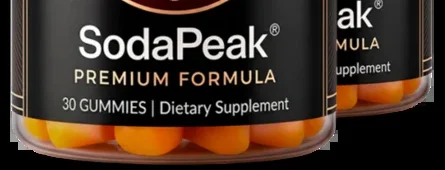
The seller's own product photo, as used across the SodaPeak storefronts. It shows a brand mark and a gummy count; neither bottle face carries a Supplement Facts panel.
- Two ingredient labels circulate for the same bottle. One folds eight ingredients into an 82 mg blend; the other prints seven separate amounts adding up to 650 mg. Only four ingredients appear on both.
- The brand's press release of October 9 names sodapeak.com as the official site and lists the 650 mg formula. The FAQ on sodapeak.com describes the other one.
- Both labels say one gummy a day. Four of the "official" storefronts say two, which turns a 30-count bottle into a 15-day supply.
- We found three refund policies for one 60-day guarantee: sealed bottles only with a 20% restocking fee; all bottles back, opened or empty; and a refund only after 30 days of use.
Our scorecard
Verdict: two labels, no single answer
| What we checked | Score |
|---|---|
| Label transparency (amounts per ingredient) | 2 / 5 |
| One consistent label and serving | 0 / 5 |
| Evidence at the amount supplied | 1 / 5 |
| Seller identity and contact | 1 / 5 |
| Refund terms as written | 1 / 5 |
| OVERALL | 1.0 / 5 |
Sources: eleven storefronts using the SodaPeak name, the brand's checkout, FAQ and return-policy pages, and its October 9 press release, opened October 9, 2026 (listed under Sources, not linked) · two published label reproductions · PubMed · FDA and NCCIH pages · Amazon.com listing B0013OQIJY, same day. This brief is unpaid and independent. When we do point to a specific product, we link to authorized retailers and may earn a commission at no extra cost to you.
Which SodaPeak this review covers
SodaPeak is a pectin gummy marketed to adult men as a once-a-day energy supplement, 30 gummies to a bottle. Despite the name, it has nothing to do with baking soda. At least eleven domains use the brand, most of them affiliate pages styled as the official store. On October 9, sodapeakofficial.com, soda-peak.com, mysodapeak.com, trysodapeak.com and sodapeak.shop all ended on the same checkout page on sodapeak.com, under the same affiliate number, and en-sodapeak.com reached that page under a different one. Payment runs through BuyGoods. We scored that checkout, its linked policies, the brand's FAQ and the two labels attributed to the product.
Two labels for one bottle
Reproduced in a magazine label write-up published September 8, 2026. One gummy a day; 10 calories and 3 g of added sugar each. An 82 mg proprietary blend (the panel says it equals about 567 mg of dry plant material) of muira puama, maca, catuaba, green tea extract, ashwagandha, L-arginine, Tribulus terrestris and Epimedium, with no per-ingredient amounts. Caffeine sits outside the blend on its own line: 5 mg. Sweetened with corn syrup, cane sugar and sorbitol. Distributor: "Instituto Experience," Lakeland, Florida.
Printed on mysodapeak.com, in a label supplied to an outside reviewer on September 7, and in the brand's October 9 press release. One gummy a day, 650 mg of actives: Tongkat Ali 200 mg, maca 100 mg, ashwagandha 100 mg, Epimedium 100 mg, L-arginine HCl 50 mg, beet root 50 mg, grape seed 50 mg. About 6 calories and 1.5 g of sugar. Cane sugar and glucose syrup, plus starch. Distributor: "Instituto Experience," PO Box 12730, Ogden, Utah.
Maca, ashwagandha, Epimedium and L-arginine. Muira puama, catuaba, green tea, caffeine and Tribulus exist only on A; Tongkat Ali, beet root and grape seed only on B. trysodapeak.com describes a six-item version of B with no beet root.
The pre-sell storefronts print no panel at all, and en-sodapeak.com describes capsules rather than gummies.
On October 9 a press release distributed through GlobeNewswire, datelined Ogden, Utah, named sodapeak.com as the official site and listed the seven items of label B. The FAQ page on sodapeak.com, behind the same checkout, describes the formula as built around muira puama, maca and catuaba, the core of label A, and calls it "an active, stimulating supplement." trysodapeak.com, which sends buyers to the same checkout, says SodaPeak is not a stimulant and contains no caffeine. Visit sodapeak.com itself and you land on an untouched Portuguese-language WordPress starter site, its sample post still published, with the brand's internal checkout and funnel pages showing in the menu.
One gummy or two
Both labels, the press release and the brand FAQ say one gummy a day, and the checkout labels its two-, three- and six-bottle packs as two, three and six months of product, arithmetic that holds only at one a day. sodapeakofficial.com, soda-peak.com, soodapeak.com and the free-hosted lookalike tell readers to take two, "approximately 1 g." sodapeakofficial.com now relabels its packs as 30, 45 and 90 days to match; soodapeak.com keeps 30, 90 and 180 days at two a day, which cannot all be true at 30 gummies a bottle. The brand FAQ goes further and calls the six-bottle pack a "full 6-month treatment." A dietary supplement is not a treatment.
What the research says at these amounts
Under label A nobody can compare doses, because eight ingredients share 82 mg. Under label B the arithmetic is possible, and it is unflattering.
Ashwagandha has the strongest file. In a 60-day trial, 64 adults with long-running stress were randomized to placebo or a 300 mg root-extract capsule twice daily; stress-scale scores fell significantly more with the extract. In a second 60-day trial, 60 stressed but healthy adults took 240 mg once a day; a clinician-rated anxiety scale improved versus placebo, while a self-rated scale narrowly missed significance. The tested range, 240 to 600 mg a day, is two to six times label B's 100 mg.
Maca was given as 3 g a day of a spray-dried extract for 12 weeks to 175 adults in a placebo-controlled trial; self-rated mood and energy improved more than on placebo, and the extract was well tolerated. Three grams is thirty times label B's 100 mg. Tongkat Ali's best-known controlled study ran four weeks in 63 moderately stressed adults taking a standardized hot-water root extract and found lower tension, anger and confusion subscale scores than with placebo. That trial used 200 mg a day, the same figure label B prints, but label B does not say whether its extract is standardized the way the tested one was, and one four-week study is a thin base. Tribulus, on label A only, did no better than placebo for strength in 22 rugby players over five weeks of training. L-arginine is studied in grams; 50 mg is a twentieth of one. For Epimedium, the record is mostly lab and animal work; we found almost no placebo-controlled trials of it alone in people.
No trial of SodaPeak as a finished product appears in PubMed under either label.
Who is behind it
Every document names "Instituto Experience" as distributor, with no LLC, Inc. or other entity type, and no manufacturer. The address depends on where you look: Lakeland, Florida on label A; a PO box in Ogden, Utah on label B and in the press release; and a Largo, Florida street address on the return-policy page linked from the checkout. Support runs through a generic customer-service email domain and a toll-free number printed on the checkout and in the press release.
Price, as listed October 9, 2026
At the brand checkout: two bottles $158 ($79 each) plus $9.99 shipping, three for $207 ($69) and six for $294 ($49) with free shipping, each beside a struck-through "regular" price that works out to $179 a bottle. We found no record of SodaPeak selling at $179. The affiliate pages quote their own numbers: three bottles for $177 on soda-peak.com and soodapeak.com, and six for $234 ($39 each) on soodapeak.com. The brand says purchases are one-time with no auto-ship; we placed no order and cannot confirm billing.
The 60-day guarantee, written three ways
A 30-day minimum trial, return started within 60 days, sealed bottles only, return postage on the buyer, no refund of shipping, and a 20% restocking fee taken from the order total.
Send back all bottles "no matter if they are empty or not," opened or not, within 60 days; buyer pays return postage; no restocking fee mentioned.
A refund if you are unsatisfied "after at least 30 days" of continuous use, via email. On the pre-sell sites, the refund page amounts to "contact support" and nothing more.
Opening a bottle may or may not void the refund; the deduction may be zero or a fifth of the order. Get the governing terms in writing before you send anything back.
Why it scores low
SodaPeak is built from real, researchable ingredients and sold in a way that defeats the reason to buy them. None of SodaPeak's botanicals is alarming at these amounts. The problem is that a buyer cannot know which formula arrives, how many to take, who stands behind it, or which refund rules apply, and the brand's own pages disagree on each point.
Label A lists caffeine and green tea extract; count both if you are caffeine-sensitive. L-arginine is on both labels; Cleveland Clinic warns it can interact with several classes of blood-pressure drugs and with nitrates. NCCIH notes rare reports of liver injury with ashwagandha and with concentrated green tea extracts and advises avoiding ashwagandha in pregnancy, while nursing, and with thyroid or autoimmune disorders; it can interact with sedatives and several prescription drugs. If you take any prescription or live with a medical condition, ask your doctor or pharmacist first.
Where we'd point you instead
One ingredient, one stated amount
If the ad caught you because you want steadier daily energy and stress resilience, ashwagandha is the SodaPeak ingredient with the clearest human data, and in the trials it was taken alone at a stated amount. NOW Foods Ashwagandha 450 mg, 90 veg capsules gives one standardized extract per capsule from a manufacturer with a name and an address. Two caveats. The bottle's directions say one capsule two to three times a day, or 900 to 1,350 mg, which is more than the 240–600 mg a day used in the trials above; a single capsule would fall inside that range, so ask your doctor or pharmacist which amount fits you. And Amazon lists it as non-returnable for food-safety reasons.
Listing as checked October 9, 2026: $9.85, in stock, shipped and sold by Amazon.com, 4.5 stars from about 11,000 ratings.
Check current listing on Amazon →Plain link: https://www.amazon.com/dp/B0013OQIJY
As an Amazon Associate we earn from qualifying purchases. Amazon listings and pricing can change after we publish; we link to authorized retailers only.Sources (opened October 9, 2026):
- Storefronts opened directly on October 9, 2026 (cited, not linked): sodapeakofficial.com (home, refund-policy and contact pages), soda-peak.com, soodapeak.com, mysodapeak.com, trysodapeak.com, sodapeak.shop, en-sodapeak.com, sodapeak.vercel.app, soda-peak.net and sodapeak-official.com, with the destination of each order button traced the same day.
- Brand pages opened October 9, 2026 (cited, not linked): sodapeak.com home page, FAQ and refund-policy page, and checkout page; the return-policy page the checkout links to on a separate domain.
- SodaPeak product-launch press release, GlobeNewswire, datelined Ogden, Utah, October 9, 2026 (cited, not linked).
- Label A as reproduced in a SodaPeak label-and-research review, MovieMaker Magazine, published September 8, 2026 (updated September 10). Label B as reproduced in "SodaPeak Premium Formula Review 2026: Label Transparency, Marketing Claims, and Consumer Red Flags," TutelaMedical.com (label recorded September 7; updated October 9, 2026).
- Chandrasekhar K, et al. Indian J Psychol Med. 2012;34(3):255-62. 60-day placebo-controlled trial of an ashwagandha root extract, 64 adults (PMID 23439798)
- Lopresti AL, et al. An investigation into the stress-relieving and pharmacological actions of an ashwagandha (Withania somnifera) extract. Medicine (Baltimore). 2019;98(37):e17186 (PMID 31517876)
- Gonzales-Arimborgo C, et al. Acceptability, safety, and efficacy of oral administration of extracts of black or red maca (Lepidium meyenii) in adult human subjects. Pharmaceuticals (Basel). 2016;9(3):49 (PMID 27548190)
- Talbott SM, et al. J Int Soc Sports Nutr. 2013;10:28. Placebo-controlled trial, 63 adults screened for moderate stress, standardized root extract for four weeks; mood-state outcomes (PMID 23705671)
- Rogerson S, et al. J Strength Cond Res. 2007;21(2):348-53. Five-week placebo-controlled Tribulus terrestris trial in 22 elite rugby league players (PMID 17530942)
- NIH National Center for Complementary and Integrative Health — Ashwagandha
- NIH National Center for Complementary and Integrative Health — Green Tea
- Cleveland Clinic — L-Arginine
- U.S. Food and Drug Administration — Questions and answers on dietary supplements
- Amazon.com listing B0013OQIJY, NOW Supplements Ashwagandha 450 mg (Standardized Extract), 90 Veg Caps — price, stock, seller, return status and label text as displayed October 9, 2026; affiliate link in the box above.